
The One-Click Test Fools Almost Everyone
When you're touring a house, someone always hits the wall button, the door rolls up smooth and quiet, and everyone nods and moves on. It's tempting because it's fast, it looks conclusive, and a working door feels like one less thing to worry about on a long walkthrough. But a single clean cycle tells you almost nothing. Springs can be a season away from failing and still lift the door that one time. Cables can be half-frayed and still hold. A general home inspector is covering the whole house in an hour and usually gives the garage door the same ten-second glance you just did. If you want to actually know what you're buying, you need to open the garage, kill the opener, and work through it by hand.
Walk This Checklist Yourself
1. The Manual Balance Test
Pull the red release cord to disconnect the opener, then lift the door about halfway by hand and let go. A properly balanced door should stay put on its own. If it crashes down or shoots upward, the springs are worn, mismatched, or sized wrong for the door's weight. That's not a minor fix — it's a sign the whole spring system needs attention before the door gets used much more, and it's the kind of thing that fails suddenly, usually when you're in a hurry.
2. Spring Condition
With the door closed, look at the torsion spring above the opening. Check for rust pitting, gaps between coils that look uneven, or a spring that looks stretched compared to its neighbor. Humid air and salt exposure speed up corrosion on springs faster than most buyers expect, and a rusted spring is a weaker spring even if it hasn't broken yet.
3. Cable Condition at the Bottom Brackets
Look at the cables running from the bottom corners of the door up to the drums. Frayed strands, visible rust, or a cable that looks loose or slack is a red flag. A cable failure under tension can cause the door to drop hard on one side, and it's often one of the cheaper line items to repair — but only if someone catches it before it snaps.
4. Track Alignment and Rollers
Sight down both tracks from the front. They should run straight and parallel with no dents, bends, or pinched spots. Push the door slowly by hand and watch the rollers — grinding, hopping, or a door that drifts to one side as it moves usually means a track has been knocked out of alignment at some point, sometimes from storm debris or just age.
5. Panel Condition, Especially the Bottom Section
Run your hand along the bottom panel and check for soft spots, swelling, or rust streaks. The bottom panel takes the brunt of standing water and humidity, and in this part of Florida that moisture exposure adds up over the years. A swollen or rusted bottom panel isn't just cosmetic — it can throw off the door's seal and weight balance.
6. Weatherstripping and Bottom Seal
Check the rubber seal along the bottom of the door and the vinyl strips along the sides. Cracked, flattened, or missing weatherstripping lets water in during heavy afternoon downpours and gives pests an easy way inside. It's a small, inexpensive fix, but a missing one is a sign maintenance has been skipped elsewhere too.
7. Opener Age and Safety Reversal
Close the door and set a 2x4 flat on the ground in its path, then trigger the door to close. It should reverse immediately on contact. Also check that the photo-eye sensors near the bottom of the tracks are aligned and lighting up — a sensor that's been bumped out of alignment is one of the most common reasons a door won't close at all, and it's often blamed on the opener itself.
8. Wind-Load Bracing
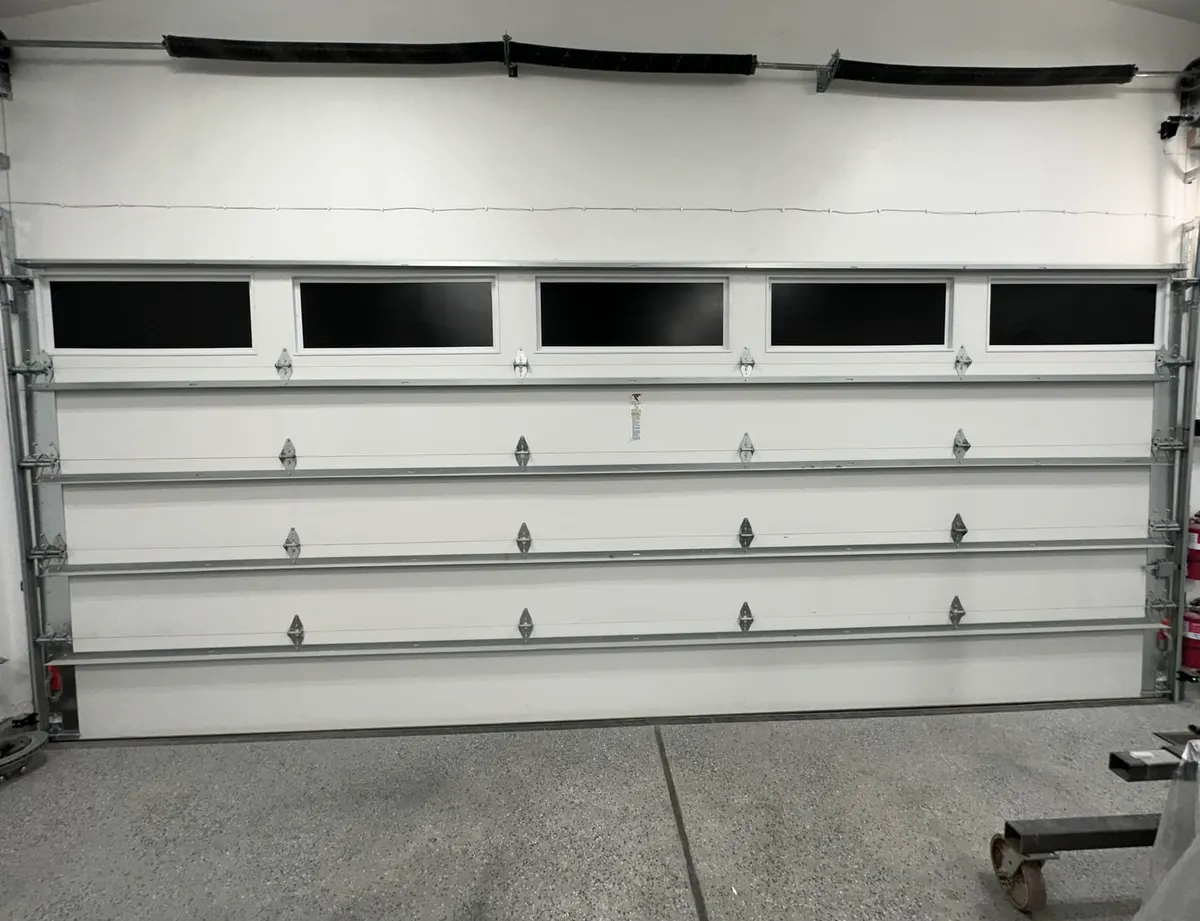
Look at the back of the door for horizontal reinforcement struts and a bracing label. Given the hurricane-season wind-load expectations in this area, a door without proper bracing is a real liability, not just a missing feature. This is one of the items general inspectors are most likely to skip entirely, since it requires actually knowing what reinforced bracing looks like.
9. Signs of Past DIY Repairs
Mismatched bolts, zip ties holding brackets, a spring that looks like it came from a different door — these are signs a previous owner patched a problem instead of fixing it. It doesn't mean walk away, but it does mean budget for a proper repair rather than assuming the quick fix will hold.
When to Call Bascom Overhead Door Co
If you're under contract on a house in Bascom, Marianna, Grand Ridge, Sneads, Malone, Campbellton, Graceville, or Cottondale and any of these checks come back questionable, it's worth having us take a look before you close. We can run a full inspection, handle Garage Door Spring Repair or Garage Door Cable Repair if the balance test or cables gave you trouble, and tell you honestly whether a panel needs replacing or the whole system is sound. Call Bascom Overhead Door Co and we'll walk the garage with you, not just click the button and wave goodbye.