
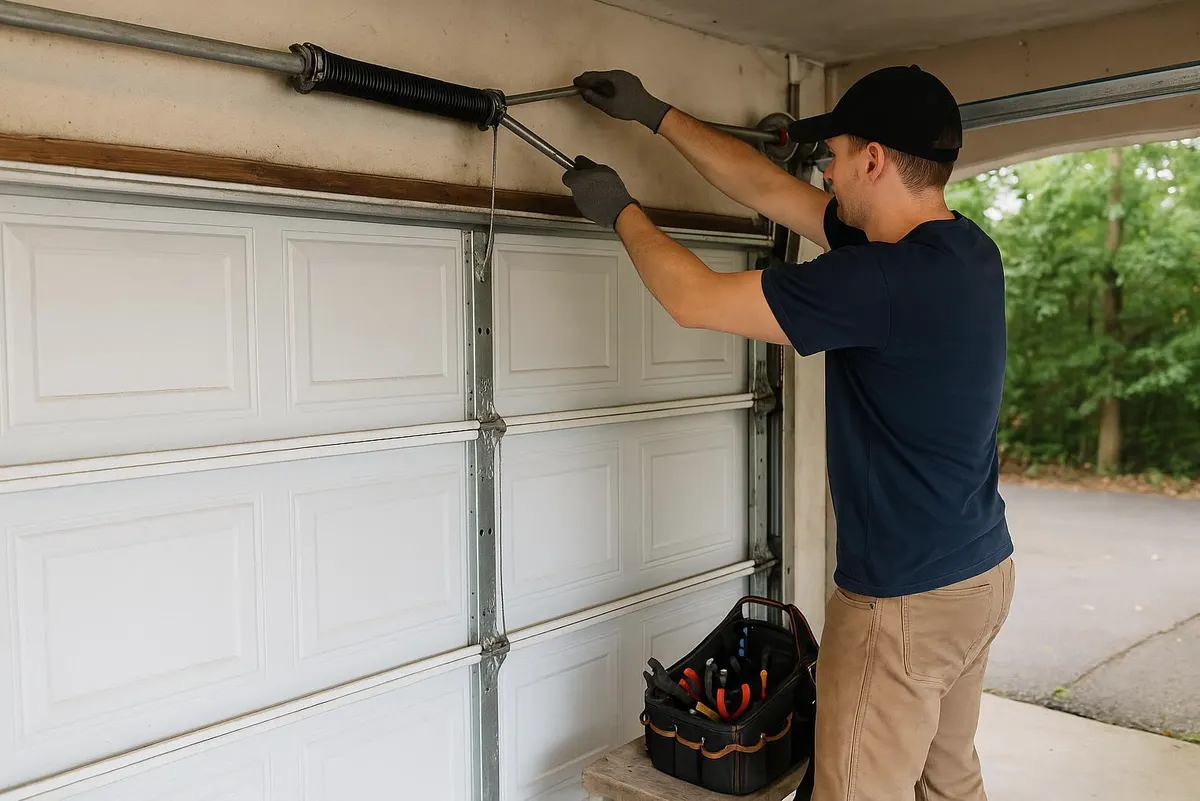
What a Service Call for a Noisy Door Usually Looks Like
When one of our technicians pulls up to a noise complaint in Jackson County this time of year, the scene is pretty predictable: a homeowner standing in the driveway with the remote in hand, the car parked halfway out, and a door that's 'been getting louder for a few weeks.' October around Bascom still brings thick afternoon humidity and the occasional tropical system working through, and that combination of moisture, heat, and wind is exactly what turns small hardware problems into loud ones. Before we touch a bolt, we listen to the sound and watch the door run through a full cycle, because the type of noise tells us almost exactly where to look first.
Grinding: Metal Fighting Metal
Grinding sounds like exactly what it is — metal scraping against metal, usually loudest at one specific point in the door's travel rather than the whole way up or down. The door may also hesitate or jerk slightly where the noise happens.
- Rollers first. We spin each roller by hand. Steel rollers rust once the factory grease washes out in heavy rain, and plastic rollers get brittle and develop flat spots after a few Florida summers of heat cycling. Worn rollers get swapped for sealed nylon rollers, which hold up better in this climate.
- Track alignment next. We check for gaps between the roller and track wall, and for dents from a car bumper, storm debris, or a pressure-washer nozzle. A bent track gets reset with a torque driver on the mounting bolts, not hammered back by hand.
- Bearing plates last. The center and rear bearing assemblies get a spin test. If they're dry or pitted, they're lubricated or replaced.
Squealing: Usually the Cheapest Fix
Squealing is a higher-pitched sound that repeats every cycle, and it often shows up right after a stretch of heavy rain followed by a few dry, hot days — the lubricant gets rinsed off the hardware and then baked out.
- Dry hinges and rollers. This is the first and most common cause. The fix is a silicone or lithium-based garage door lubricant on hinges, roller stems, and springs — not WD-40, which evaporates fast and attracts grit.
- Worn hinge pins. If lubrication doesn't quiet things down, the metal hinge points themselves have worn oval over time and need replacing.
- Opener trolley or chain. A dry rail or loose chain will squeal independently of the door hardware and needs its own lube and tension adjustment.
Popping: Usually About Tension, Not Random
Popping is a sudden bang or jump, often in the first few feet of travel, sometimes strong enough to make the door visibly flinch.
- Binding points on the track first. Debris, a small dent, or a slightly misaligned section can let the door catch and then release with a pop. Cleaning and realigning the track often solves this outright.
- Loose hardware second. A hinge or bracket bolt that's backed out can catch and pop free on every cycle. A season of storm winds working against the door panels loosens fasteners faster here than in calmer climates, so this is worth checking after any named storm or long windy stretch.
- Springs last, and carefully. A pop right near the top of travel can mean a torsion spring coil is rubbing or has lost tension and is slapping the shaft. Humidity speeds up rust and fatigue on springs, shortening their working life. This one isn't a DIY fix — springs are under heavy tension and adjusting or replacing them safely takes the right bars and experience.
Rattling: Looseness, or Wind Doing Its Work
Rattling is a shaking or buzzing noise, often most noticeable right before or during a storm, or when the opener starts and stops.
- Loose fasteners first. Bolts, nuts, and screws on hinges and brackets work loose from normal vibration and from wind load during storms. Checking and tightening everything is the fastest, cheapest first step.
- Opener chain or belt slack. A loose chain rattles against the rail housing; tensioning it to the manufacturer's spec usually quiets it.
- Track brackets loose from the framing. This is more serious, since garage doors here need to handle real wind load during tropical storms and hurricane-season gusts. Loose brackets mean the door isn't bracing the way it's supposed to, and that's a safety issue, not just a noise issue.
- Swollen or warped panels. Humidity can swell wood composite panels enough that they rattle against the frame or neighboring panels. If adjustment doesn't fix it, the panel usually needs replacing.
When to Call Bascom Overhead Door Co
If tightening hardware and lubricating the moving parts doesn't quiet the door down, or if the noise is popping tied to the spring area, a grinding sound that's come with the door jumping off its track, or rattling that showed up right after a storm, it's time to get a technician out. We'd check spring tension and condition as part of a Garage Door Spring Repair, inspect frayed or rusted cables, and if the door has actually come off the rail, handle it as an Off Track Door Repair before it causes further damage to the panels or opener.
If your garage door in Bascom, Marianna, Grand Ridge, Sneads, Malone, Campbellton, Graceville, or Cottondale has started making noise it didn't used to make, give Bascom Overhead Door Co a call — we'll find out what's actually going on before it turns into a bigger repair.